Posts

Movie Conventions Research: Saw X
Image
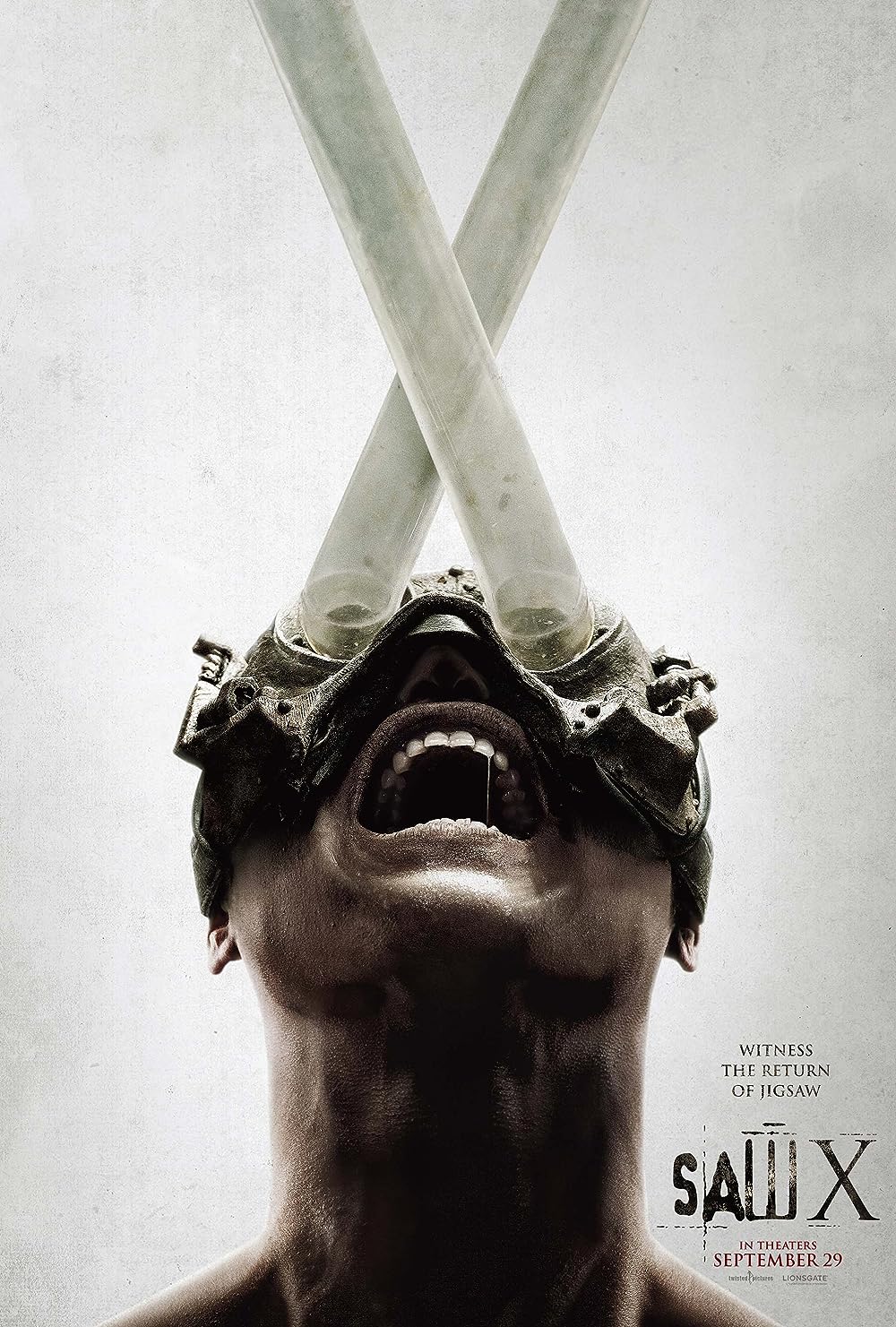
  What elements (Conventions) of the genre that you chose to base your final task on does this movie have?  For this project we chose the thriller genre and the conventions in this movie help build suspense for the audience.  The film uses flashbacks with the present timeline,  exploring the backstory of the Jigsaw Killer and his victims.  This adds depth to the characters,  sheds light on their motivations,  and creates a connection within the narrative.  The film also uses slow zooms on key details,  like ticking timers or hidden clues within the traps.  This builds anticipation and draws the audience's attention to specific elements,  heightening the suspense. What elements (Conventions) of the genre did the movie have that you like? I liked the  close-ups on faces,  hands,  and trapped body parts,  amplifying the characters' fear and the gruesome details of the traps.  These close-ups heighten the audi...

Movie Conventions Research: Annabelle

Image
  What conventions of the genre that you chose to base your final task on does this movie have? Annabelle employs jump scares to startle viewers and create moments of intense fright. The film also utilizes atmospheric tension, building a sense of unease and anticipation throughout. With the presence of a supernatural entity. Annabelle taps into the classic horror trope of the haunted or possessed object. Additionally, the movie incorporates eerie settings, such as dimly lit rooms and old houses, to enhance the feeling of dread and fear. What conventions) of the genre did the movie have that you liked? In the horror genre I really enjoy seeing well-executed jump scares, and Annabelle had exactly that. The jumpscares frightened me and were able to get me out of my seat. The movie also had eerie settings that allowed for the fear factor to rise. I really enjoy watching horror films with such areas and lighting because it really allows me to feel angst.  What conventions of the ge...

Movie Conventions Research: Don't Worry Darling

Image
  What elements (Conventions) of the genre that you chose to base your final task on does this movie have?  Our genre, thriller, contains conventions that signal the reader they are in for a suspenseful film. Some of these include close-ups of characters' faces and quick cuts. both of which were seen in the film. The close- ups help to display clearly the change in emotion the actor portrays during an event. This is especially important within this genre of thriller as a lot of the time, we learn sinister details through what a character is discovering. Quick cuts on the other hand set a fast and engaging pace during action. Black and white scenes created by editing is another part of thriller films. This aspect was used in the film to enhance emotion and low lighting. Even to enact fear in the viewer. What elements (Conventions) of the genre did the movie have that you like? Some of my personal favorite aspects of the film Don't Worry Darling include the dietetic sound of ee...

Genre Decision: Final Task

Image
Welcome back to another blog Camination!! After examining each genre, Katherine and I have decided that we want our final task to be a Thriller. While this choice was mainly due to our storyline correlating closest with other movies of this genre the most, it was also picked over the genre "Horror" due to specifics we enjoyed more. Our final task is focused on the unknowing of what is coming next, which is of the utmost importance in a Thriller movie, whereas a Horror movie relies on the aspects of the film itself to be scary. This brings more depth to the film we are trying to put forward, along with the specific sounds and camera angles.  Katherine and I are very excited to put forth our Thriller Final Task for you guys!! I'll see you in the next blog!!  

Genre Research: Thriller

Image
Genre: Thriller Common Camera Angles, movement, and Shots: Common angles are Dutch, low, and high angles. Low angles are  often used in thrillers to emphasize how powerful and intimidating a villain is.  Common movements are tracking and tilting.  These are used in thrillers and horrors to make it look like one of the characters is being followed or watched. It also helps the audience have a full view of the scene and what is happening but also helps build suspense and tension as the audience needs to learn what could be shown next.   Common shots are close-ups, reverse, extreme long shots, point-of-view shots, and over-the-shoulder shots.  This is one of the best ways to build up tension and suspense. It is mostly used around mirrors and reflections so the audience can see everything as soon as the character does. Common Mis-En-Scene:  Low lighting is common in creating shadows, which builds fear and tension. For props/sets, it is expected to use dark/ cla...

Genre Research: Comedy

Image
Genre: Comedy  Common camera angles, movement, and shots:   A type of cams used in comedy films are wide shots. They are used to capture the whole scene and incorporate every element including characters, and the environment into the shot. They also provide the ability to show visual gags, reveal funny situations, and showcase physical comedy. Another type of cam is a close-up. Close-ups reveal facial expressions, reactions, and nuances that contribute to comedic timing and delivery. Lastly, another type of angle is a low angle. This helps employ the effects of comedic effects, making characters appear larger than life, and emphasizing physical comedy.  Common mis-en-scene:  Some mis-en-scenes that are used are exaggerated costumes. Exaggerated costumes can enhance physical comedy and contribute to the visual humor of the characters. Lastly, there can be props for physical comedy. Cleverly chosen and utilized props contribute to visual gags, slapstick comedy, an...

Genre Research: Horror

Image
  Genre: Horror  Common Camera Angles, Shots, & Movement : Common camera angles are Dutch, low, and high angles. Common shots are POV, wide shots, and extreme close-ups. Common movement tracking shots and tilts.  Common Mis-En-Scene : Common makeup is using fake blood for bloody or gorey scenes. It also just depends on the character and what facial structure they want to emphasize. Common props are weapons such as knifes, guns, or even a chainsaw. Common costumes is dark clothing and messy/frizzy hair. Common acting is usually acting scared during some scenes. Common lighting is dim lighting uses to create tension. Some even use casting shadows. Common setting is a dark, deserted area.  Common editing  is a fade into black to build tension, the way they place their shots, and jump cuts.  Common sounds  during horror films is heavy breathing, footsteps, or the slashing or stabbing of flesh. Another big one is screams or whispers.  Examples:...